Color Conversion
#A45620Embered Sienna
About this color
Warm confidence with handcrafted authenticity
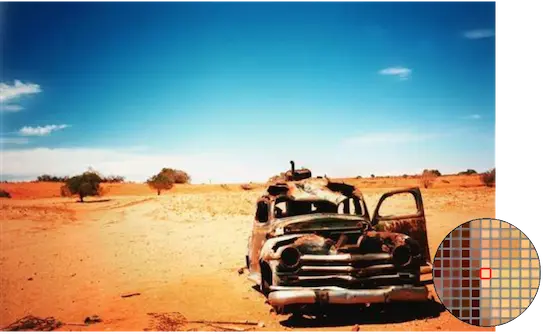
A deep, toasted orange-brown that reads like sunbaked earth kissed by emberlight. It feels warm, grounded, and quietly luxurious — the color of well-worn leather and late-afternoon light.
Designer tip: Use Embered Sienna as a primary accent over a very pale warm neutral (use CFC6B8) and apply it to tactile materials (leather, unglazed ceramics, matte metals) to emphasize materiality and hold visual weight without needing saturation.
Best use case: Branding for artisanal food or leather-goods products where tactile warmth and heritage craftsmanship must read at small sizes (labels, stamping, and e-commerce thumbnails).
Psychology
Psychological traits and emotional associations
Effect
In a space or on a product, Embered Sienna draws the eye toward texture and materiality, making surfaces feel tactile and approachable. It anchors palettes and slows perception, encouraging touch and a sense of history.
Emotional impact
A reassuring, homey warmth that suggests longevity and skill.
Meaning & symbolism
Cultural symbolism and significance
Cultural significance
Mediterranean and Southwestern architecture favor terracotta and ochre tones that read similarly as sunbaked and enduring; in Western fashion, cognac and saddle browns signal luxury and age; in some East Asian contexts, brown-orange tones are associated with harvest and ceramics. Across these cultures the shade often maps to handmade goods, rusticity, and the land.
Positive associations
Associated with artisan leather goods and Tuscan/Adobe architecture in Mediterranean and Southwestern U.S. contexts (Italy, Spain, New Mexico).
Negative associations
Can be read as 'old-fashioned' or dull in ultra-modern corporate contexts (some Western and global tech settings).
Design applications
How this color is used across different fields
Luxury packaging for small-batch spirits or olive oil
Embered Sienna conveys aged, crafted provenance and reads well embossed or as matte paperstock to imply handcrafted production values.
Upholstery and leather goods
On leather and suede it accentuates patina and wear, making products look intentionally aged and premium without appearing flashy.
Hospitality interiors (boutique inns, tasting rooms)
Used on focal walls, millwork, or trim it creates a cozy, intimate atmosphere that complements wood and stone finishes.
Food photography and menus
Works as a backdrop to highlight roasted, caramelized foods — it enhances perceived warmth and satiety while keeping focus on the dish.
Logo accent for artisan brands
As a secondary color it provides differentiation and tactile association, especially when paired with hand-drawn marks or serif logotypes.
Design guidance
Practical tips for using this color effectively in your designs
Do this
- + Pair Embered Sienna with a very light warm neutral (CFC6B8) for breathing space and to ensure text legibility on collateral.
- + Use textures (matte paper, unglazed ceramic, vegetable-tanned leather) so the hue reads as material rather than flat color.
- + Apply it as an accent at focal points (trim, spines, hero shots) rather than full-field backgrounds to preserve energy and legibility.
Avoid this
- - Don't use it as the sole background for dense body text — contrast falls short for long reads.
- - Don't pair with overly saturated neon or cool pastels that fight its warmth and make it look muddy.
- - Don't rely on glossy finishes which can shift the perceived hue toward orange and reduce the desired earthy effect.
Fundamentals: Respect contrast and texture — Embered Sienna performs best when paired with light warms and tactile materials to highlight depth without overwhelming.
Overuse risk: If this color dominates, designs can feel heavy, dated, or overly rustic; balance is needed to keep spaces and identities feeling intentional rather than muddled. Excessive application also reduces its ability to act as a rich accent that draws attention to texture and craft.
Brand fit
Industries and brand archetypes that align with this color
Trust level
medium
Seriousness
balanced
Trend
Color pairing
Colors that complement and enhance this shade
#2B7FAF
A near-complementary muted teal that creates balanced contrast (complementary harmony) and cools the warmth without high saturation clash.
#E59A3C
An analogous golden-orange that reinforces the sunbaked, autumnal family while adding a highlight (analogous harmony).
#7A1F0E
A deep, brick auburn that provides a low-contrast, rich triadic/earth-tone pairing ideal for depth and shadow areas.
Typography hints: For headlines on Embered Sienna use a 700–800 weight slab serif (e.g., Museo Slab 700) or a 700 weight humanist sans for a modern heritage feel; for body copy use a 400–600 humanist sans (e.g., Lato 400/600) in white or very pale warm neutral to maintain legibility.
Historical significance
The story and heritage of this color
Shades like Embered Sienna descend from naturally occurring ochres and iron-rich earth pigments used since prehistoric cave painting; artists and potters extracted red and brown earths, and later heat-treated yellow ochres to produce the richer burnt sienna and umber tones that resemble this color. In painting, burnt sienna (produced by heating raw sienna) and burnt umber were standard palettes by the Renaissance for underpainting and warm shadows.
Through the centuries this family of warm browns and orange-browns appeared in architecture (terracotta tiles, Roman and Mediterranean stucco), in leatherwork and saddlery across Europe, and in fashion as durable, warming hues for outerwear and boots. In 19th- and early 20th-century interior decor, similar tones were used to evoke rustic comfort in country houses and colonial interiors.
Today Embered Sienna is experiencing renewed interest as designers and brands lean into earthy, craft-forward palettes: it appears in artisan food packaging, modern rustic interiors, and sustainable product branding where authenticity and material truth are priorities. Its adaptability to tactile materials (raw ceramics, matte metal, vegetable-tanned leather) keeps it relevant for contemporary makers and hospitality projects.
Variations
The purpose of this section is to accurately produce tints (pure white added) and shades (pure black added) of your selected color in 10% increments.
Pro Tip: Use shades for hover states and shadows, tints for highlights and backgrounds.
Shades
Darker variations created by adding black to your base color.
Tints
Lighter variations created by adding white to your base color.
Common Use Cases
- • UI component states (hover, active, disabled)
- • Creating depth with shadows and highlights
- • Building consistent color systems
Design System Tip
These variations form the foundation of a cohesive color palette. Export them to maintain consistency across your entire project.
Color Combinations
Each harmony has its own mood. Use harmonies to brainstorm color combos that work well together.
How to Use
Click on any color to copy its hex value. These combinations are mathematically proven to create visual harmony.
Why It Matters
Color harmonies create balance and evoke specific emotions in your designs.
Complement
A color and its opposite on the color wheel, +180 degrees of hue. High contrast.
Split-complementary
A color and two adjacent to its complement, +/-30 degrees of hue from the value opposite the main color. Bold like a straight complement, but more versatile.
Triadic
Three colors spaced evenly along the color wheel, each 120 degrees of hue apart. Best to allow one color to dominate and use the others as accents.
Analogous
Three colors of the same luminance and saturation with hues that are adjacent on the color wheel, 30 degrees apart. Smooth transitions.
Monochromatic
Three colors of the same hue with luminance values +/-50%. Subtle and refined.
Tetradic
Two sets of complementary colors, separated by 60 degrees of hue.
Color Theory Principles
Balance
Use one dominant color, support with secondary, and accent sparingly.
Contrast
Ensure sufficient contrast for readability and accessibility.
Harmony
Colors should work together to create a unified visual experience.
Color Contrast Checker
Test color combinations to ensure they meet WCAG accessibility standards for text readability.
Text Color
Background Color
Contrast
WCAG Standards
Advanced Contrast Checker
Fine-tune with sliders, multiple previews & more
Everybody is a Genius. But If You Judge a Fish by Its Ability to Climb a Tree, It Will Live Its Whole Life Believing that It is Stupid.